
Harvest Festivals
Good food and community

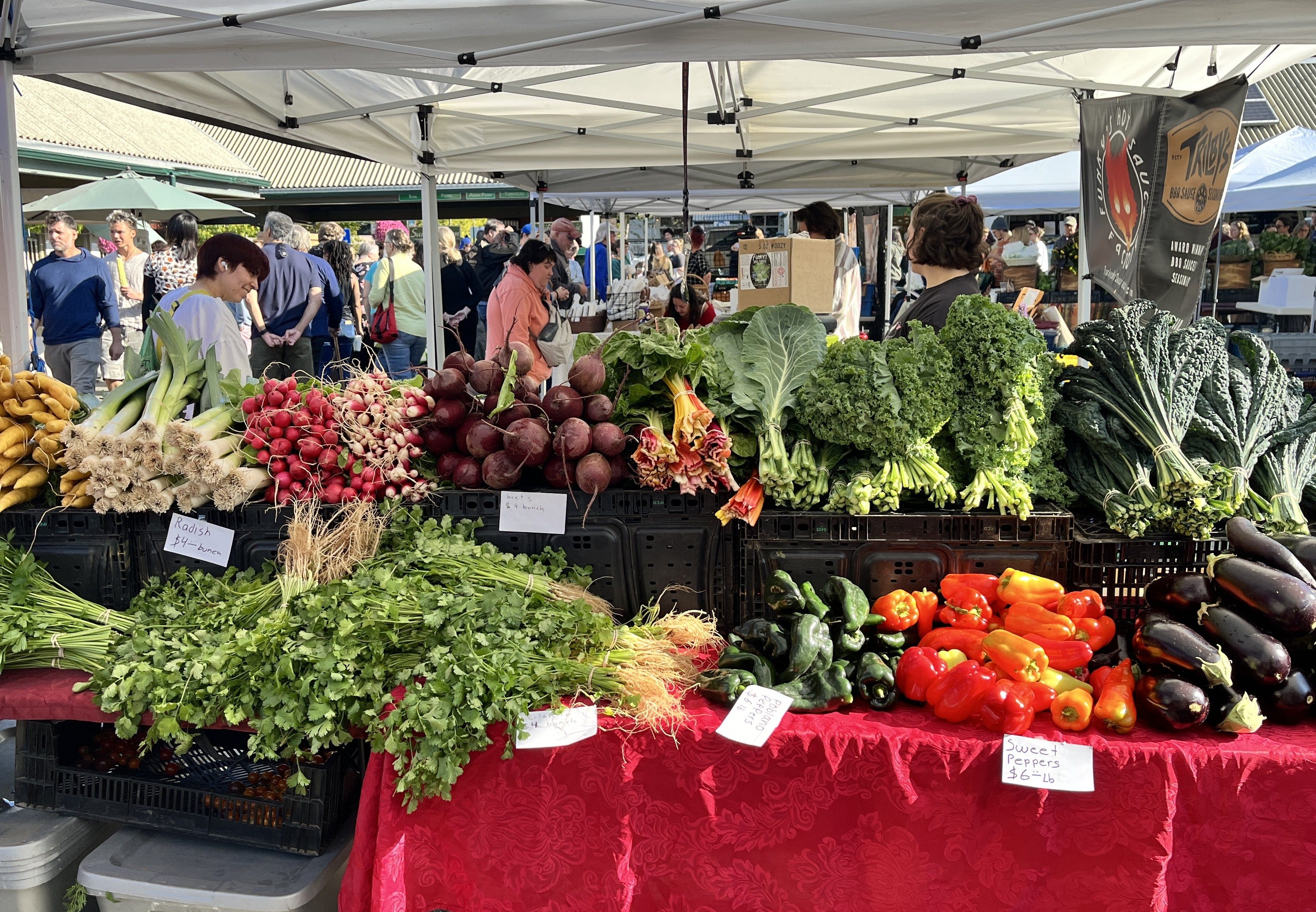
The Bellingham Farmers’ Market where the community gathers, shops and enjoys the bountiful harvests of their neighbors
Fall is the time for harvest of the summer’s bounty for farmers, for fishermen and wild foragers from the forests. End of Summer harvests have been celebrated for eons and have been instrumental in developing communities and communmity spirit around the globe. Here I will illustrate our local festivals focusing on farmers, fishermen and fungi foragers in our PNW community of Bellingham, WA.
The Farmers Market
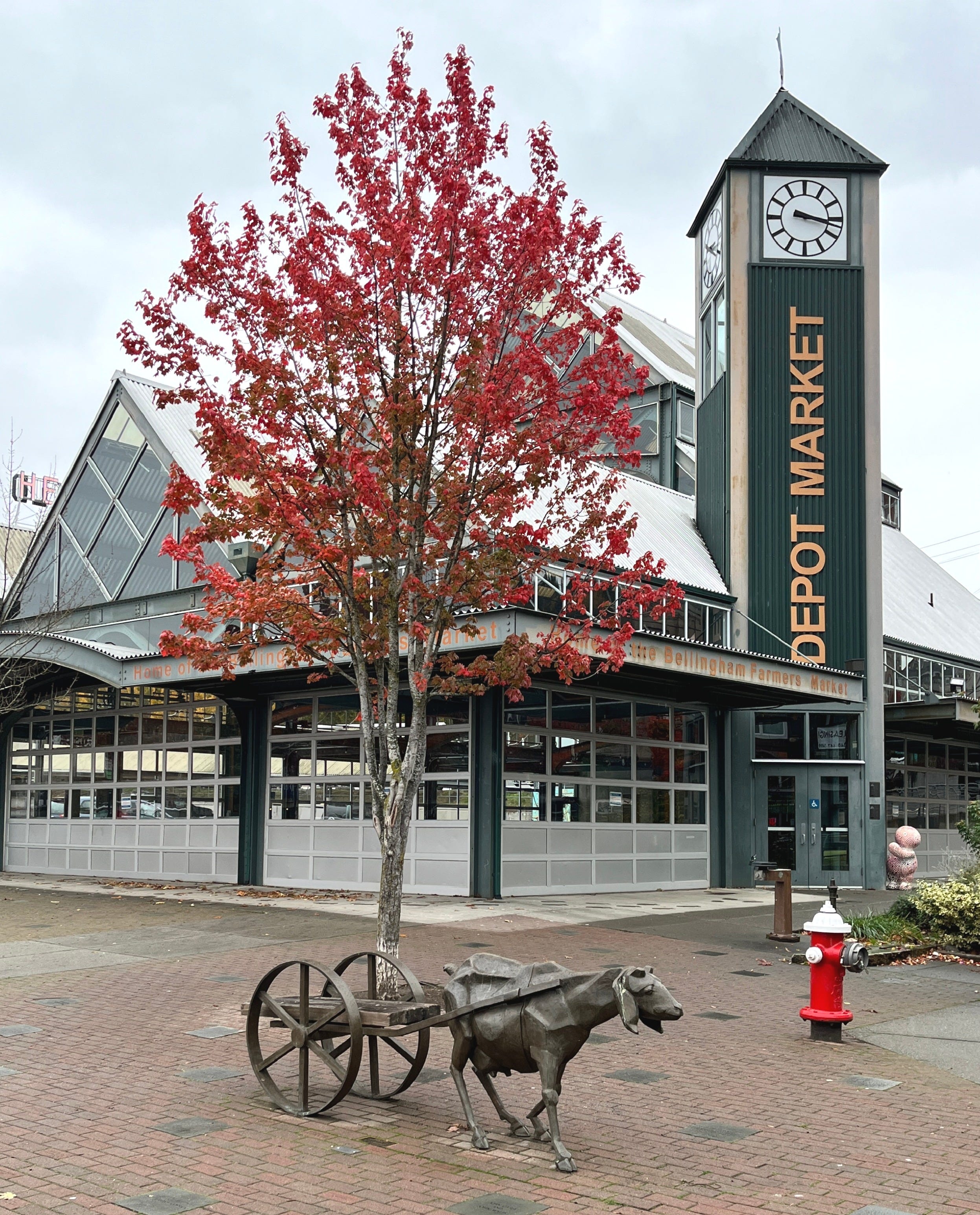
The the Depot Market that houses the Farmers’ Market
First we’ll look at our Farmers’ Market that pops up here each Saturday from April to to December 20th. The market showcases the labors of our local farmers and various artisans with their produce, bakery and atristic skills on display. In 2009 with City and community efforts, the current permenent structute was completed so that some stalls could be kept under cover, although the majority of vendors are under canopies. By comparison, ours is relately new as such harvest gatherings have occured in villages across the world since agriculture was developed at least 10,500 years ago and according to some, even as far back as 15,000 years.
I enjoy seeing artistic ways the venders display their goods.
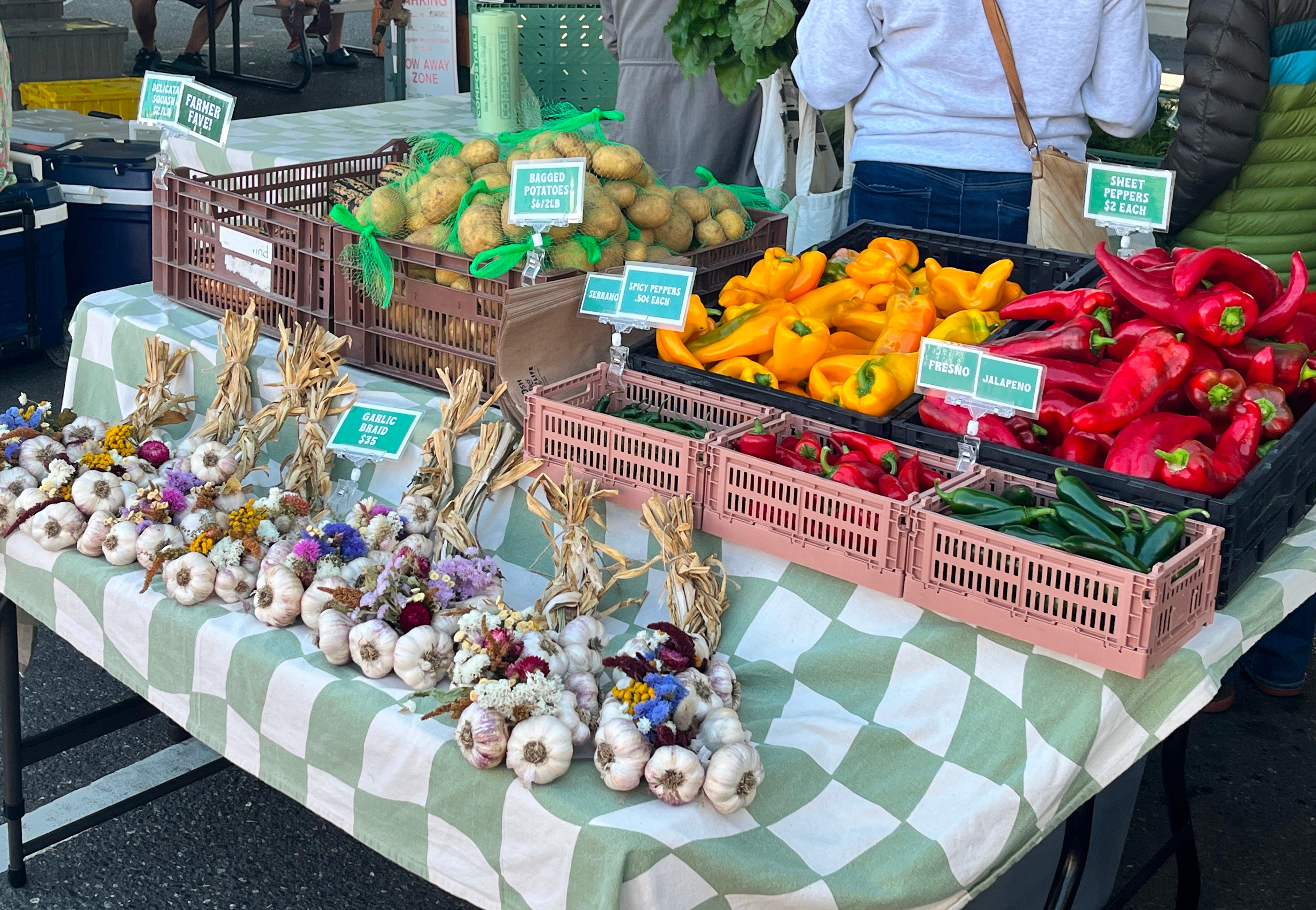
Peppers of all kinds, shapes, colors and heat ratings were on display at many booths.
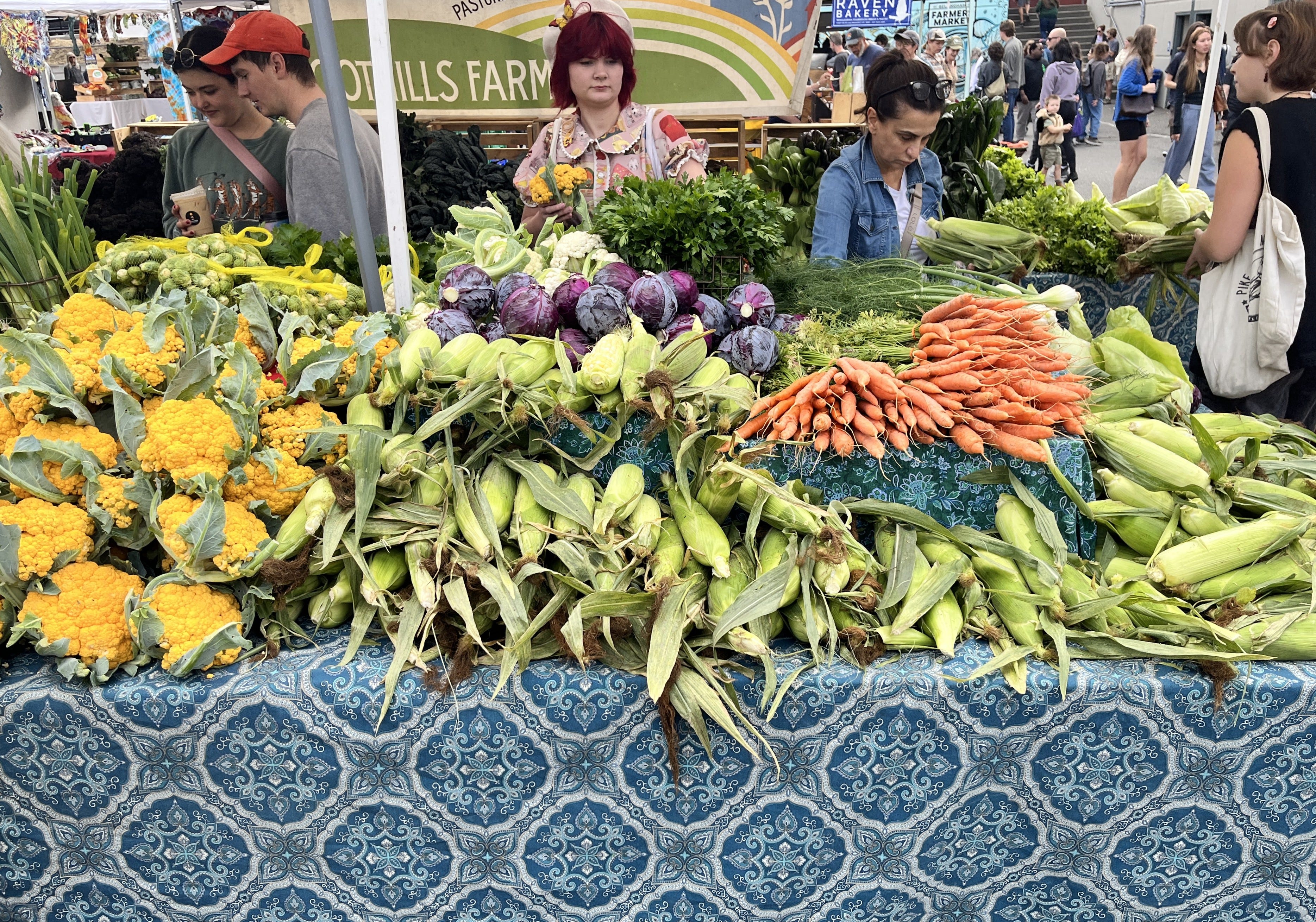
I was intrigued by the orange-yesllow califlower.
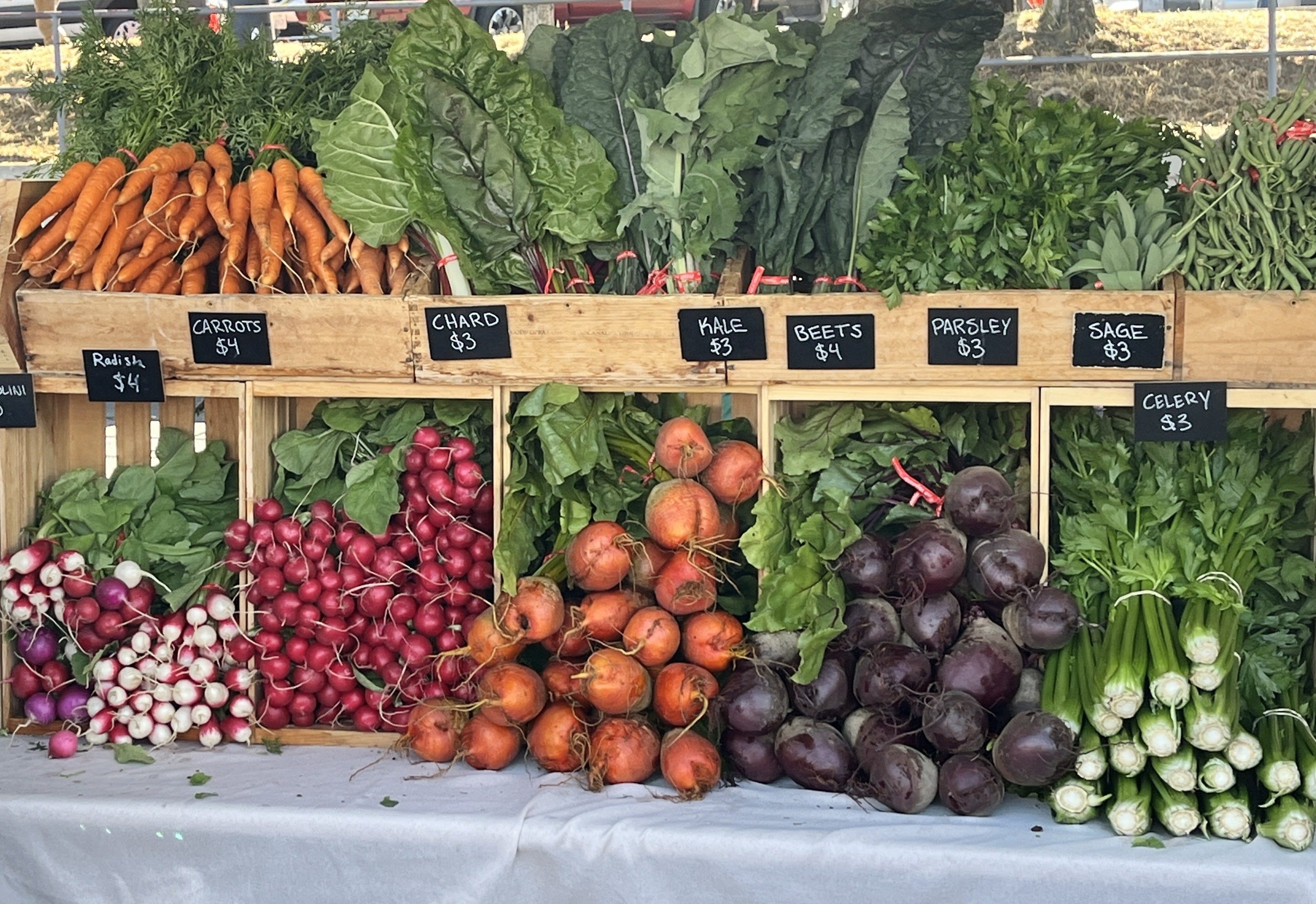
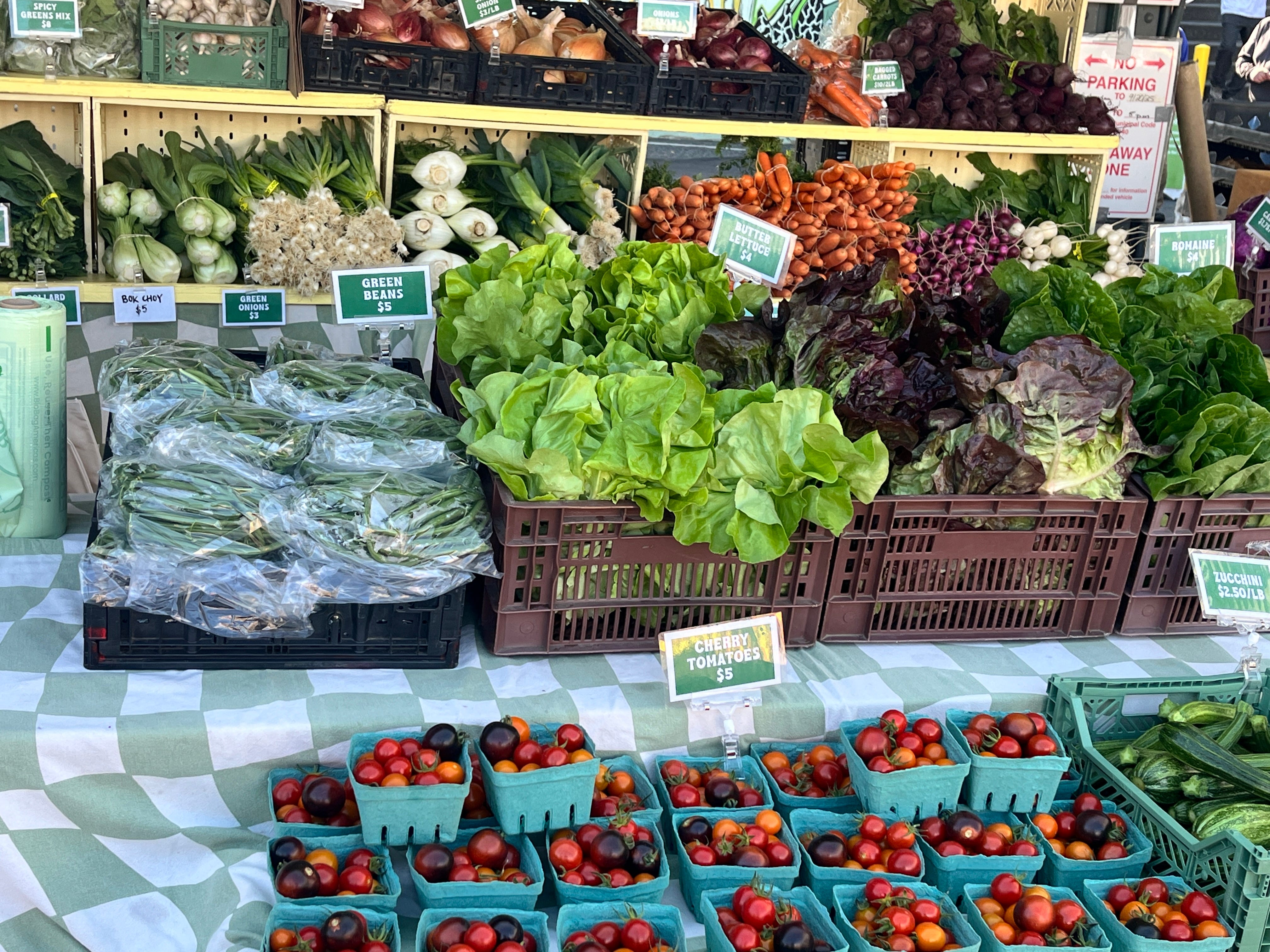
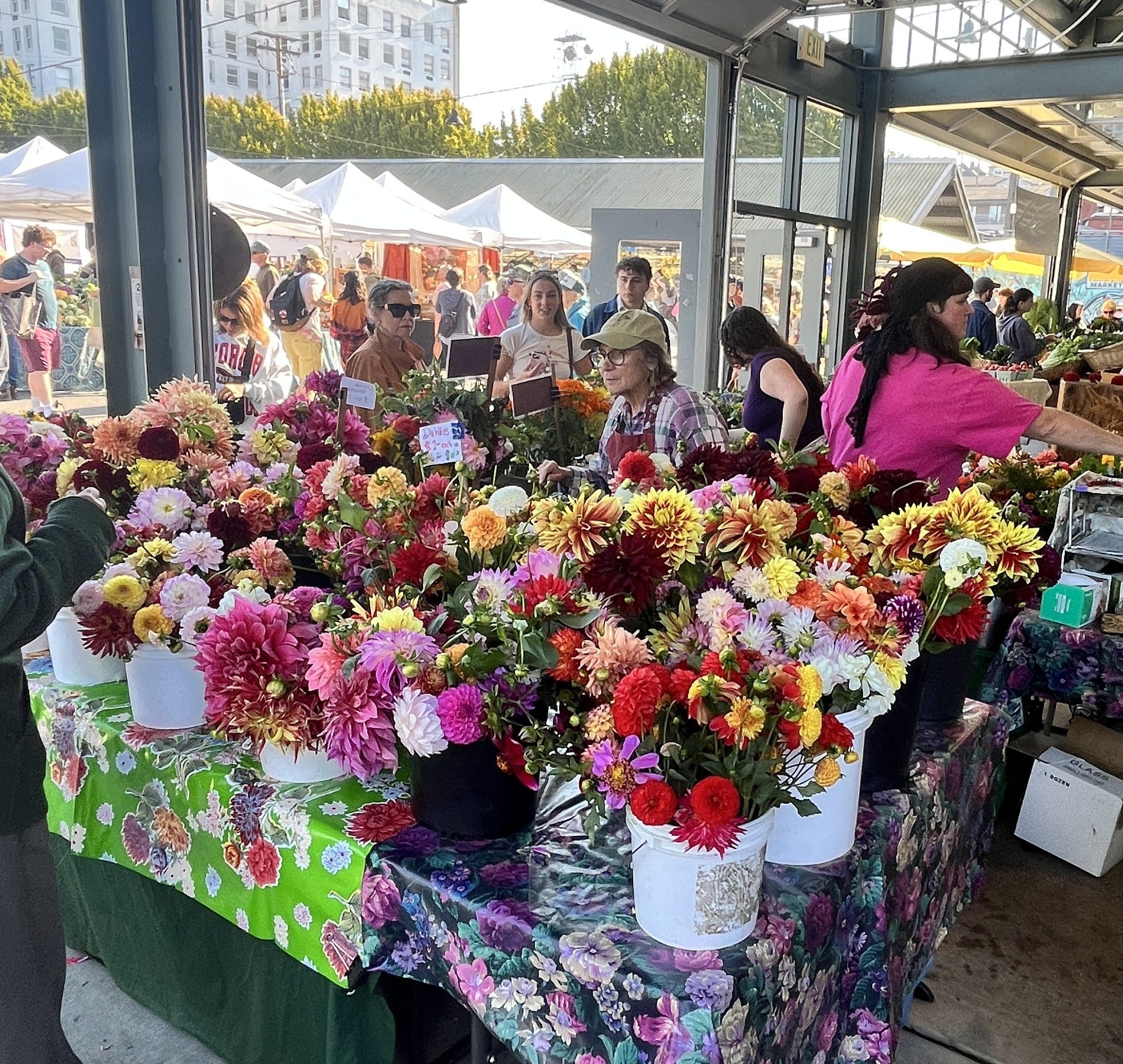
And flowers —here featuring Dahlias


Market Buskers have replaced the troubadores of the middle ages in Europe and are found at virtually all community farmers’ markets. We had some very talented buskers at this market.
SeaFeast at Squalicum Harbor
SeaFeast in Bellingham is a seafood and waterfront festival that occurs each Fall at Zuanich Waterfront Park on Bellingham Bay. Sea food production has long had a strong presence in Bellingham and once touted the largest salmon canning plant in the world : Pacific American Fisheries. This festival honors the fishers who have provided all sorts of fresh seafood to our community, and others,world-wide. The Park’s 4 acres were packed with visitors, booths, canopies and venders of many types peddling their largely seafood wares both fresh and cooked.
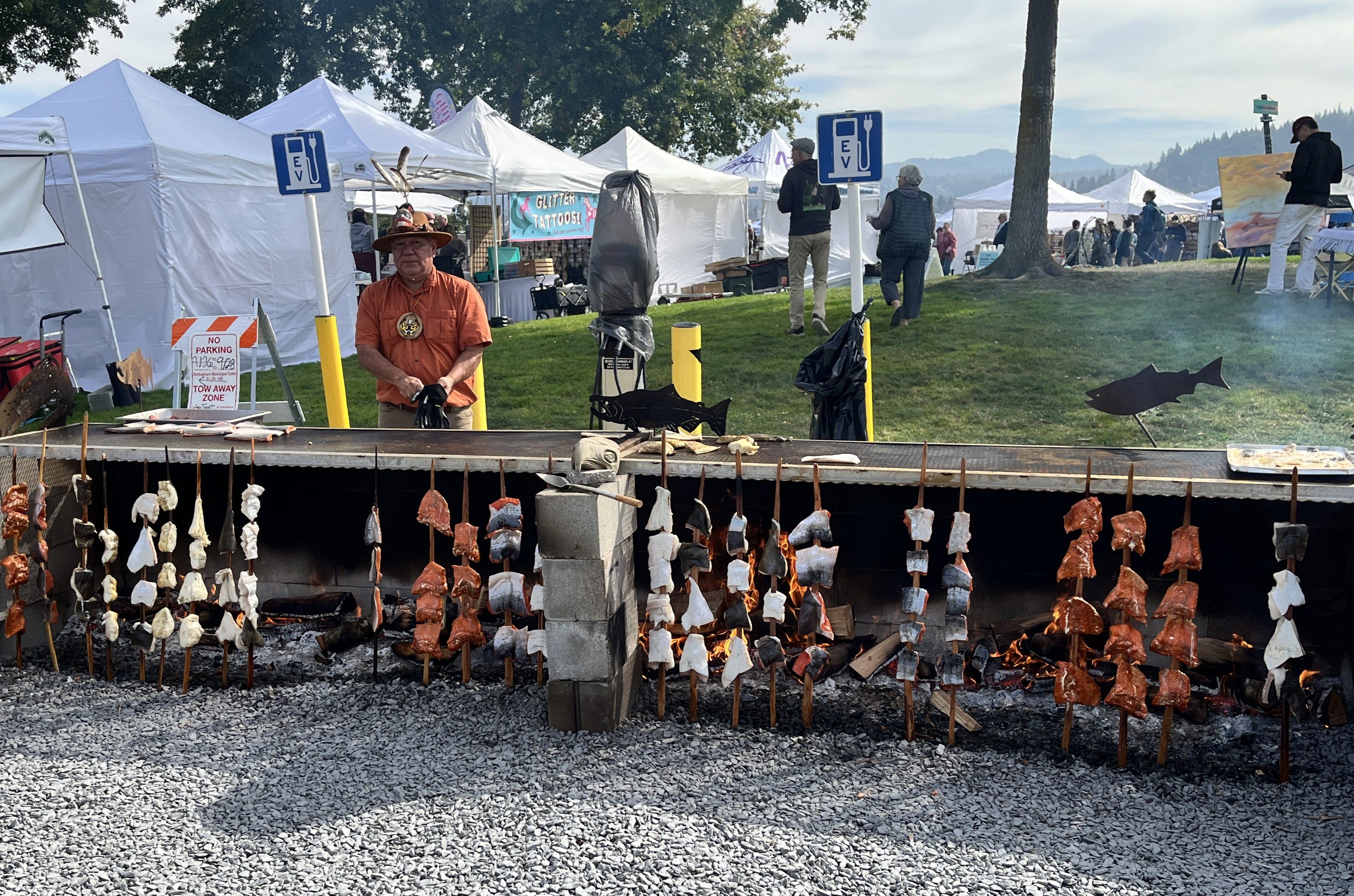
A highlight of the Summer Festivals in Bellingham is the traditional Lummi Indian salmon cook out. The alder smoked, fresh locally caught salmon is the best. I see some halibut in there too. (Enlarge this photo for a real close up.)
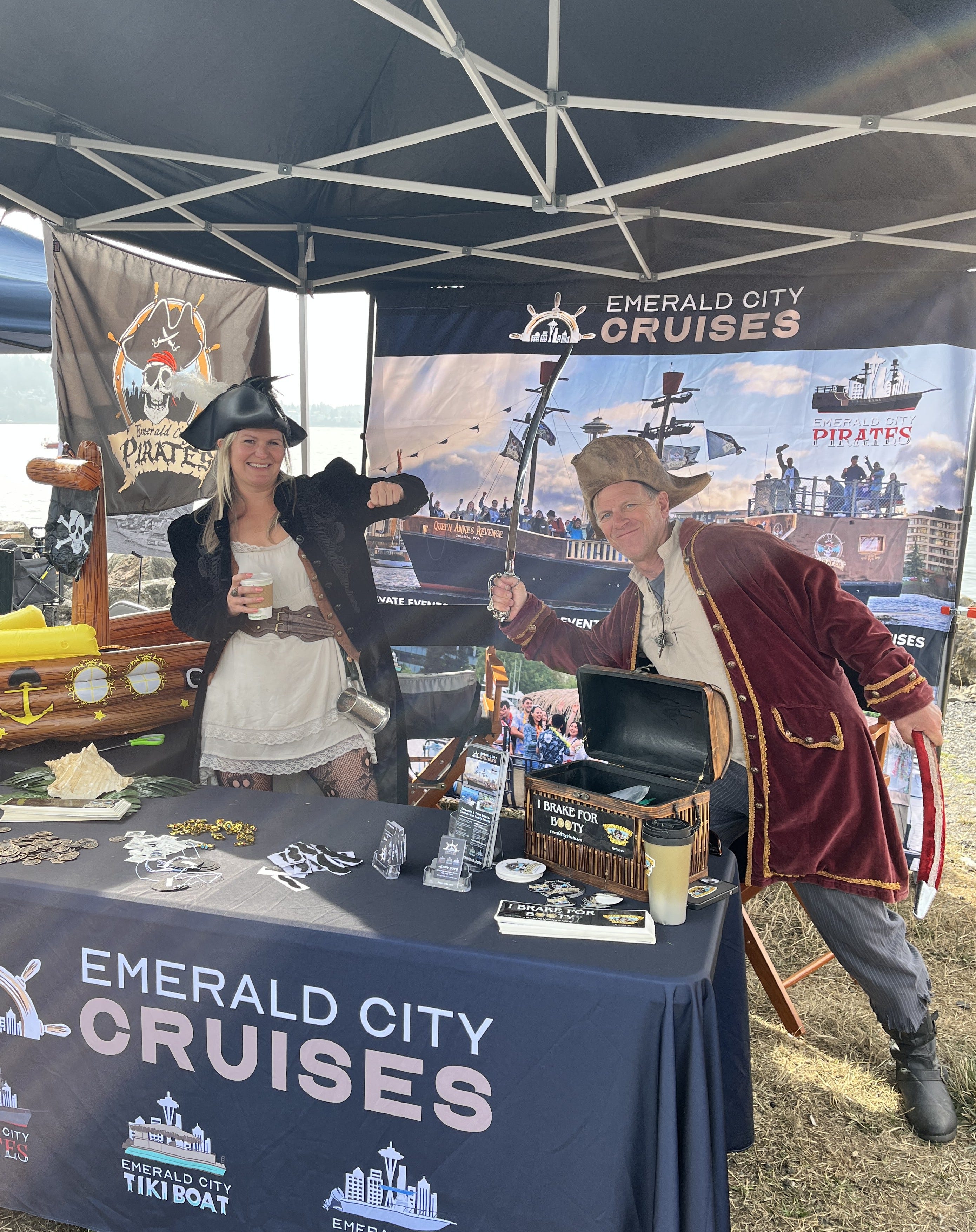
Where there are boats there are pirates.
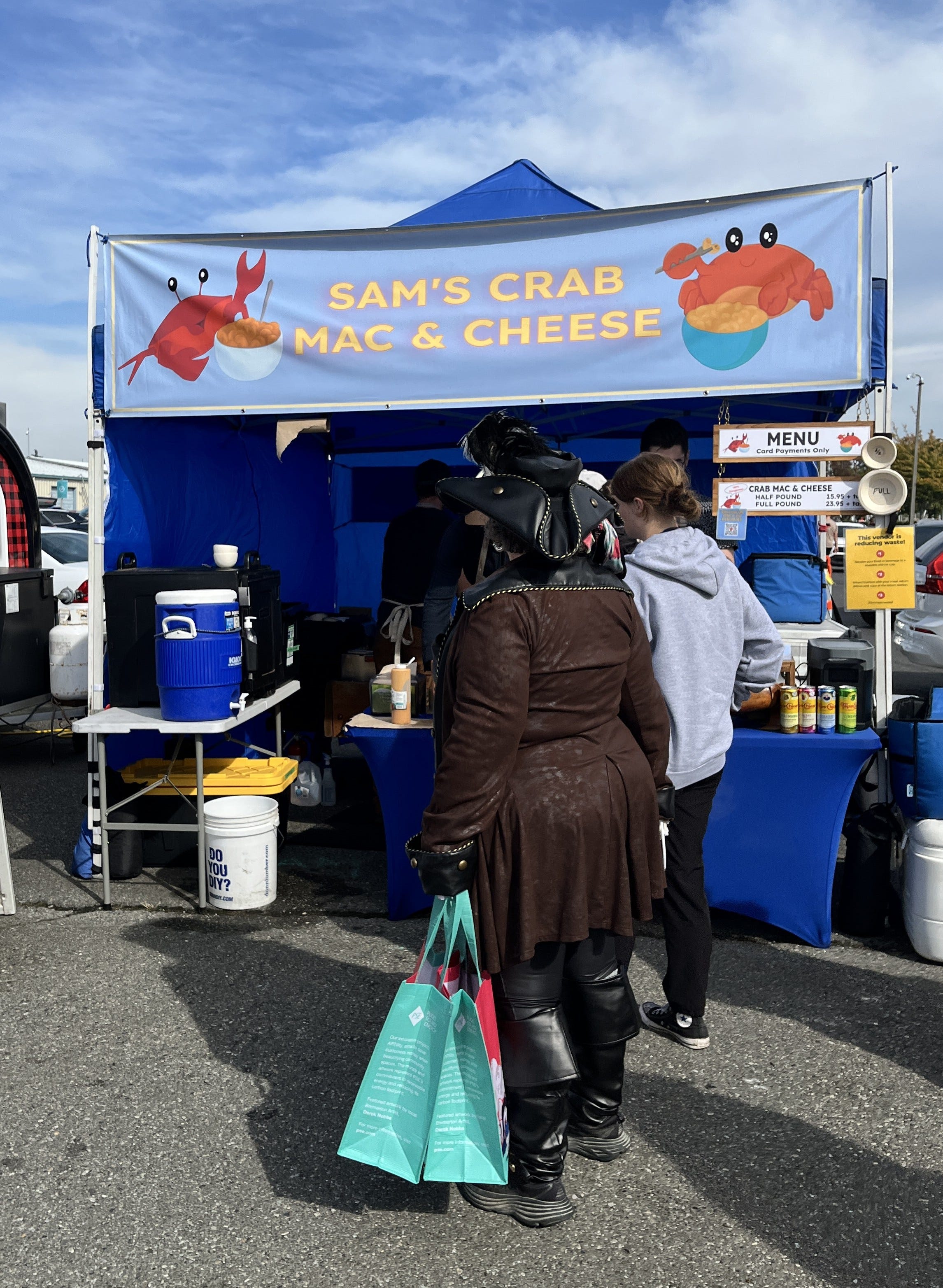
Another pirate going for the Dungeness Crab mac and cheese.
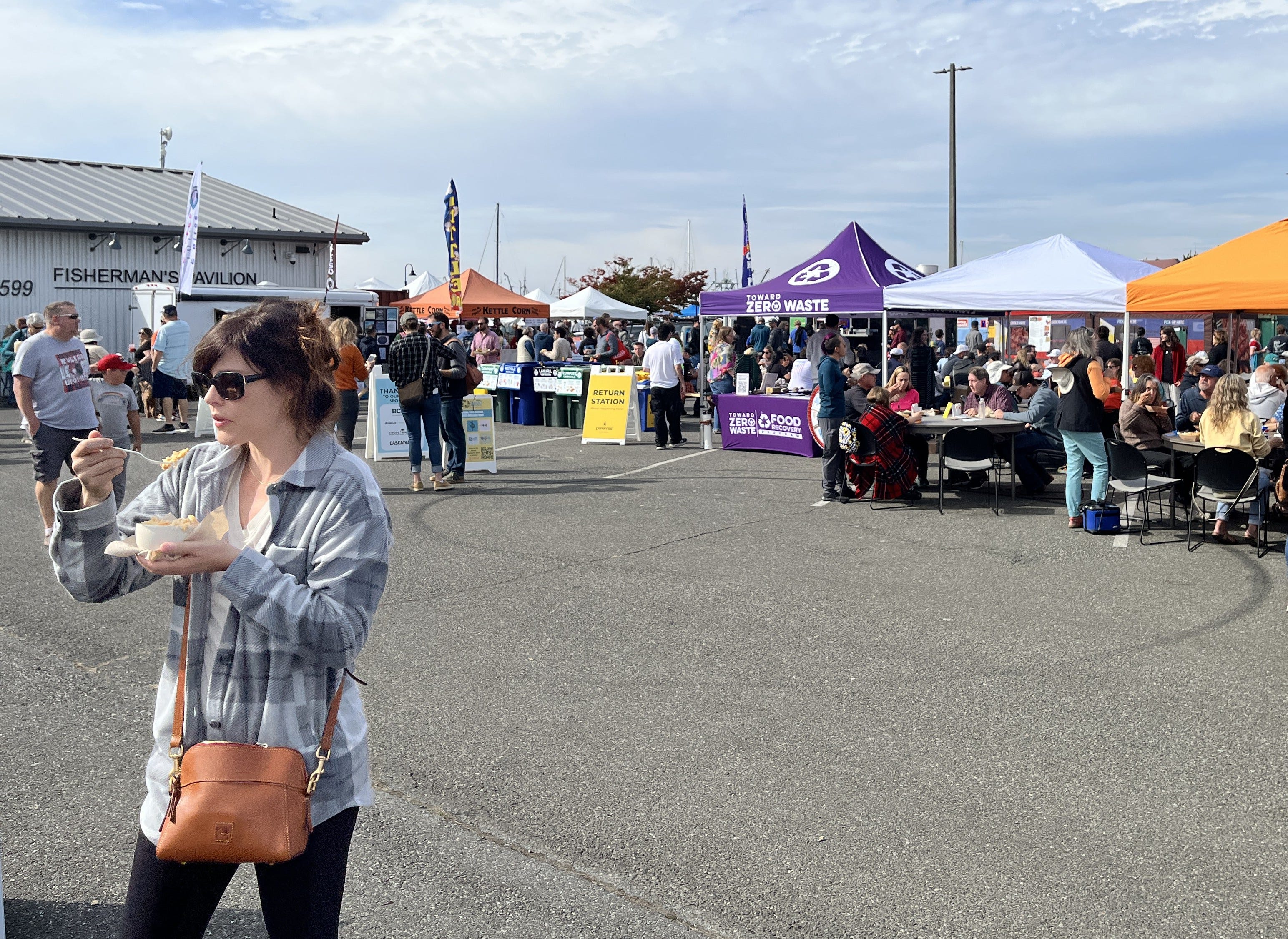
A patron enjoying a bowl of crab mac and cheese.
And it wouldn’t be much of a feast without leaving with a 5 lb. Coho salmon, fresh out of Bellingham Bay.
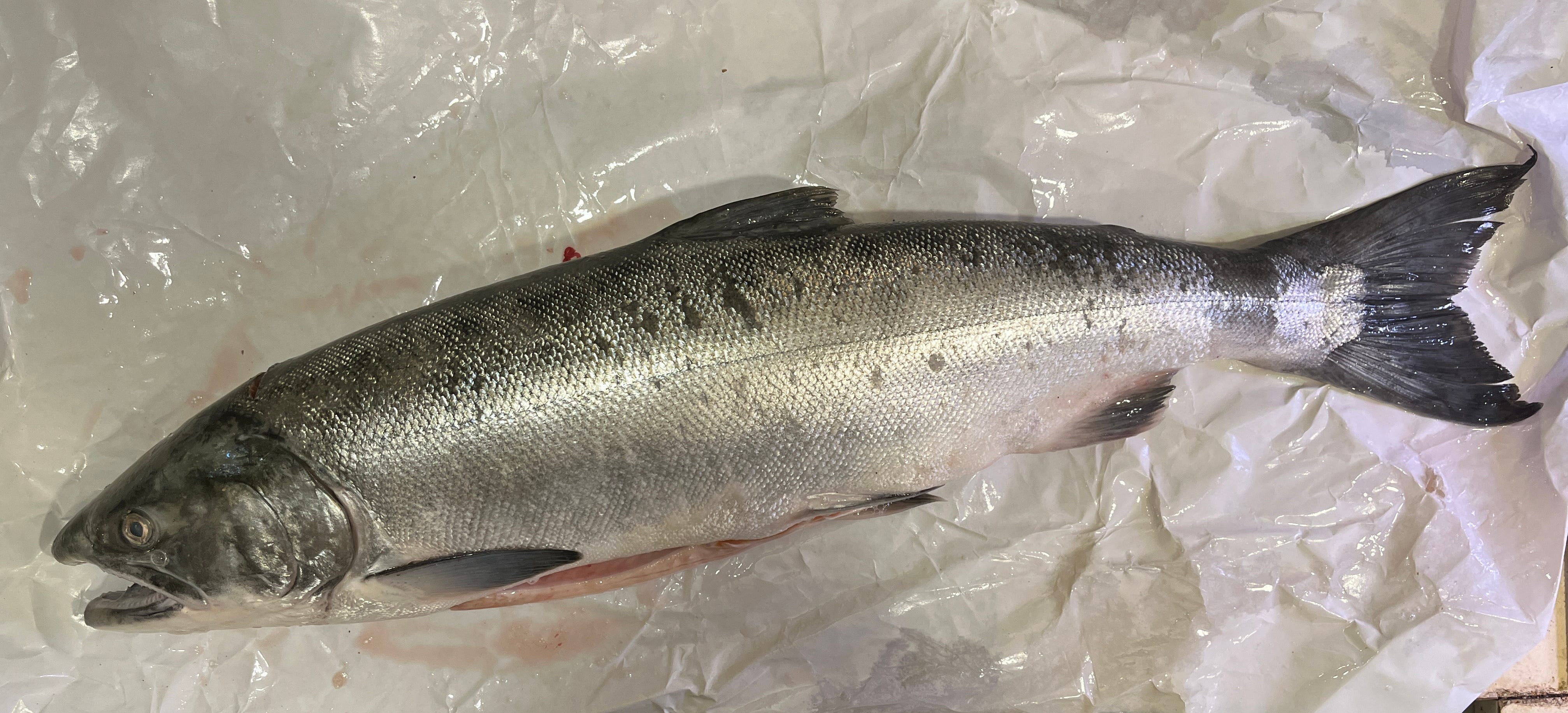
And this was my prize take away: A cleaned 5 lb. Coho (Silver) salmon. This beauty was caught the day before in the Bay by the local fishermen from whom I bought it for only $20.00.
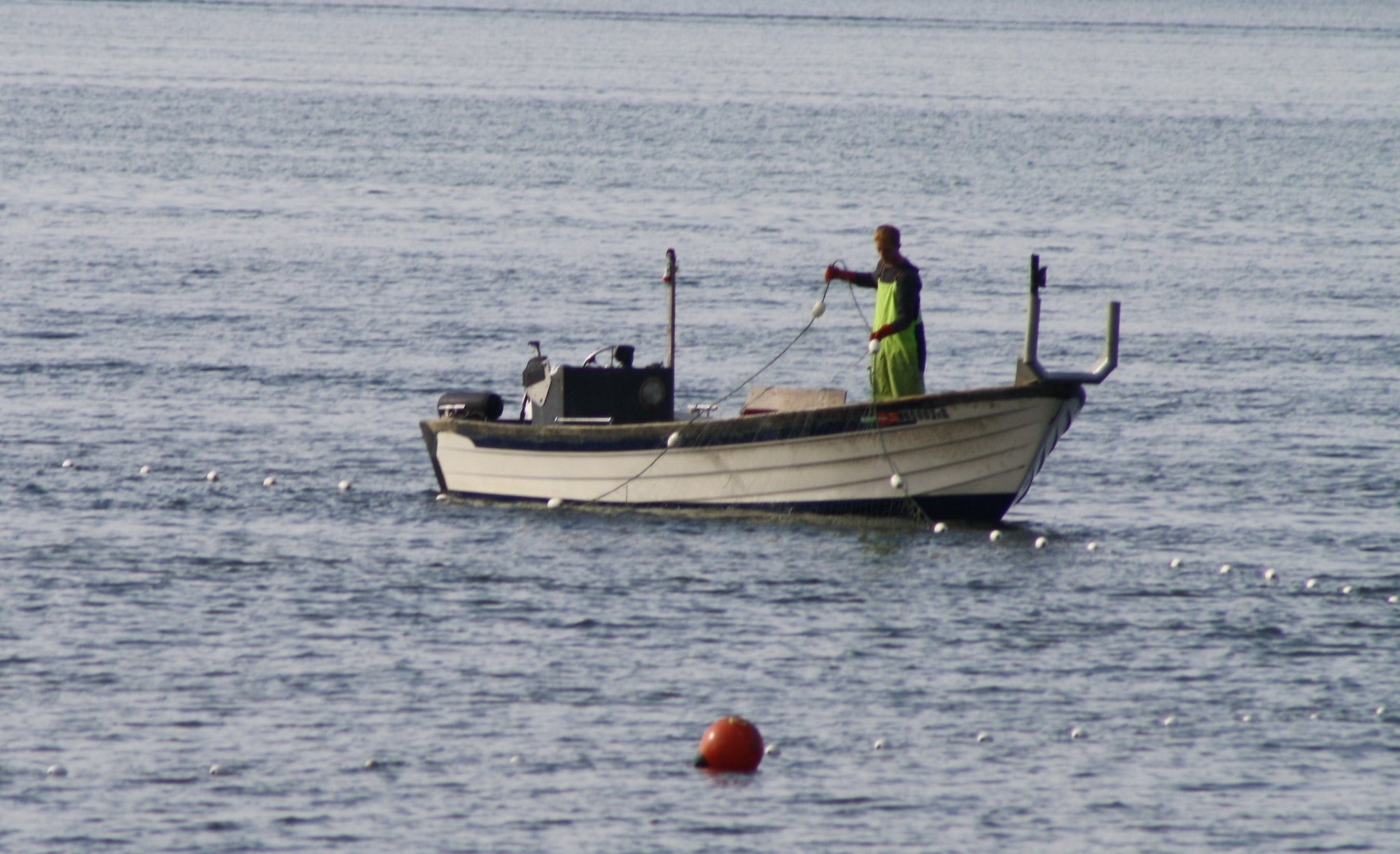
Gillnetter fisherman laying gill net about 25 yards off shore, along Boulevard Park in Bellingham. Although the Coho above was not caught with this particular boat, it was caught by one very simlar and by the same procedures.
Lummi Indian Heretige:
The Lummi Indians occupied this specific land around Bellingham Bay and adjoining islands for many thousand years. We acknowledge them as the first peoples here at all community meetings and are often entertained by their music and traditional dances as illustrated in the video below in front of the Zuanich Park Boat House.
Lummi drummers and dancers
Coast Guard Rescue demonstration
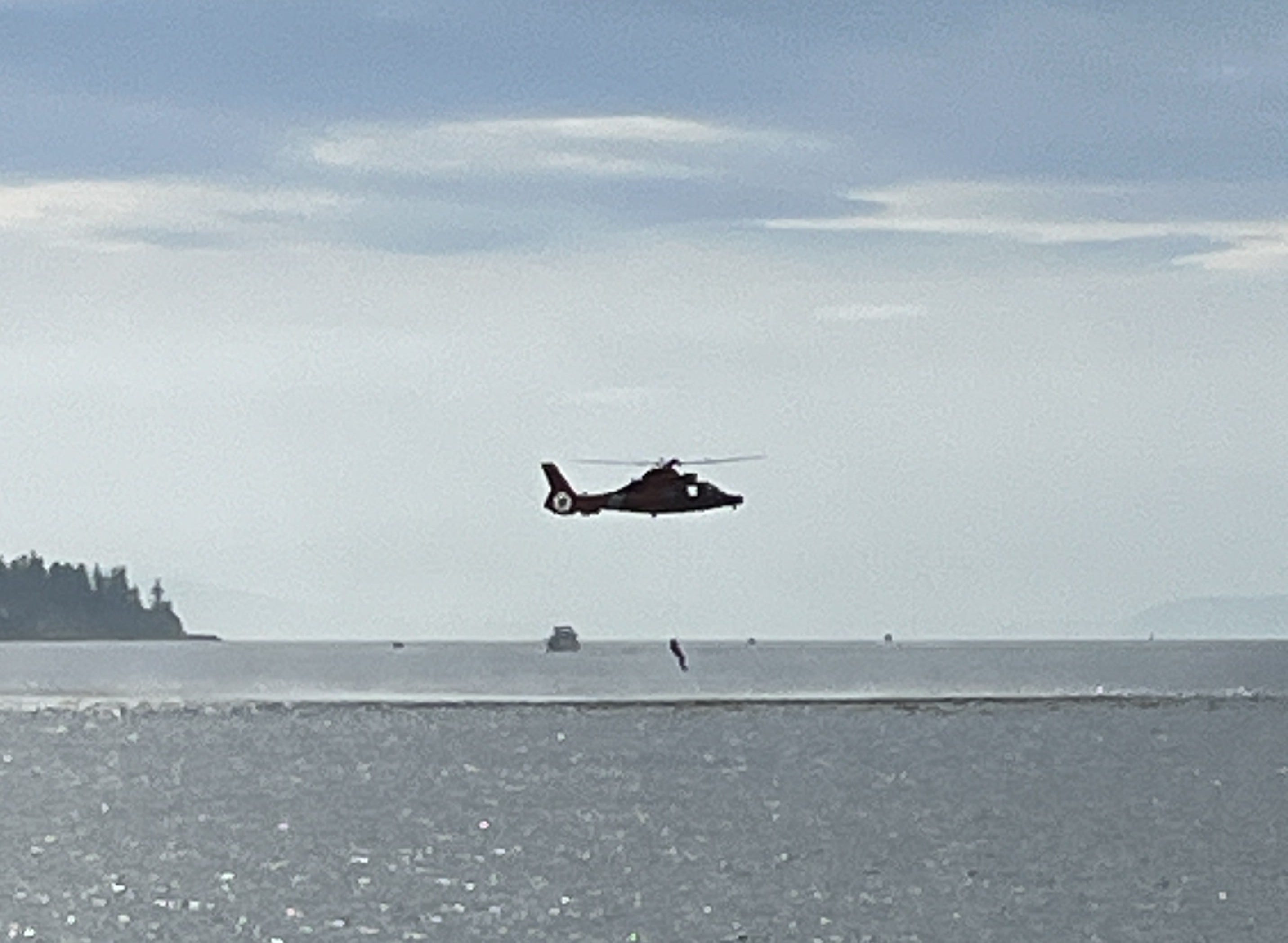
Around here we have many hundreds of boats run by fishers, commercial and sport, along with pleasure craft, plying the waters of Bellingham Bay and the adjacent larger Salish Sea. Over this expanse of cold sea water (42 Degrees F), boating accidents are unfortunately relatively common. Fortunately we have a local Coast Guard station with competent personnel on alert 24/7. They put on a helicopter water rescue demonstration a couple hundred yards off shore from the the Festival.
Below is our Fishermen’s Memorial dedicated those local fishermen who did not return. The above helicopter rescue demo was conducted just off shore behind the statue “Safe Return.”
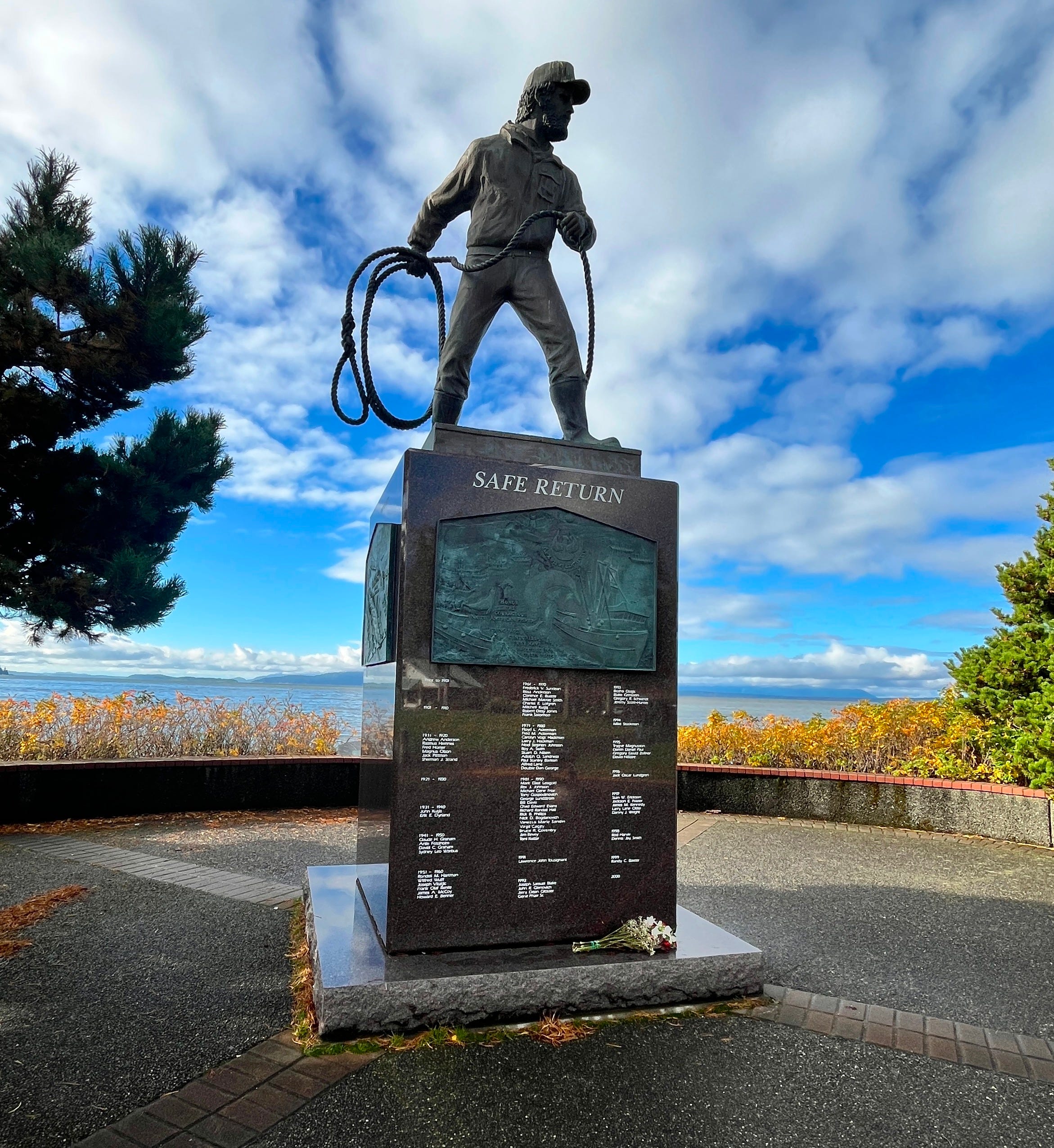
The monument “Safe Return” is a centerpiece of Zuanich Park and the festival that honors its fishers.
Annual Fall Wild Mushroom Show
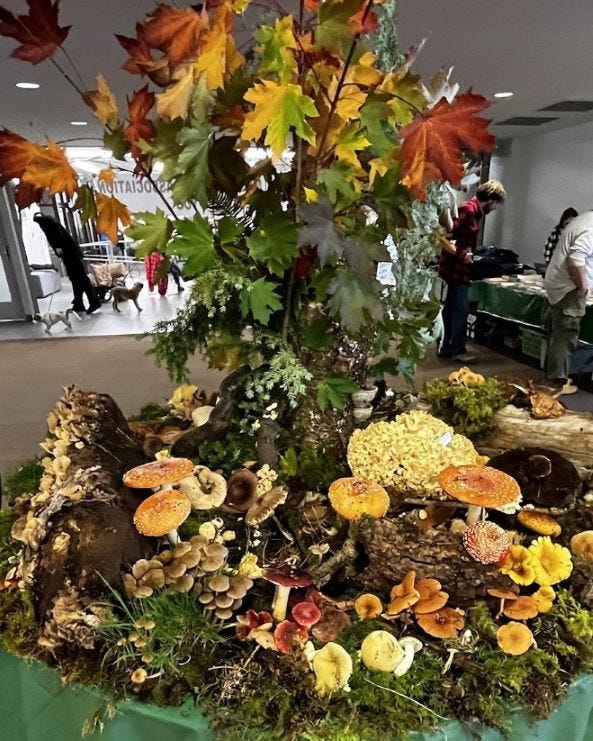
The opening display of the Show is a colorful selection of the local fungi and autum colors. (Photo by Lisa Kennedy, my daughter.)
Another communmity event, partially centered on food is the Northwest Mushroomers Association’s Annual Mushroom Show. All of the several hundred mushroom species displayed here were freshly foraged from our immediate environs a day or two before the event. In addition to numerous individual members bringing in their foraged finds, two large foray groups were unleashed the day before the show. The expert identifiers worked into the night arranging the mushrooms according to spore color, genus and species for the Sunday morning opening arrayed in baskets on long tables. What you see below are some of the fungal fruits of the mountains, forest and low lands of our area.
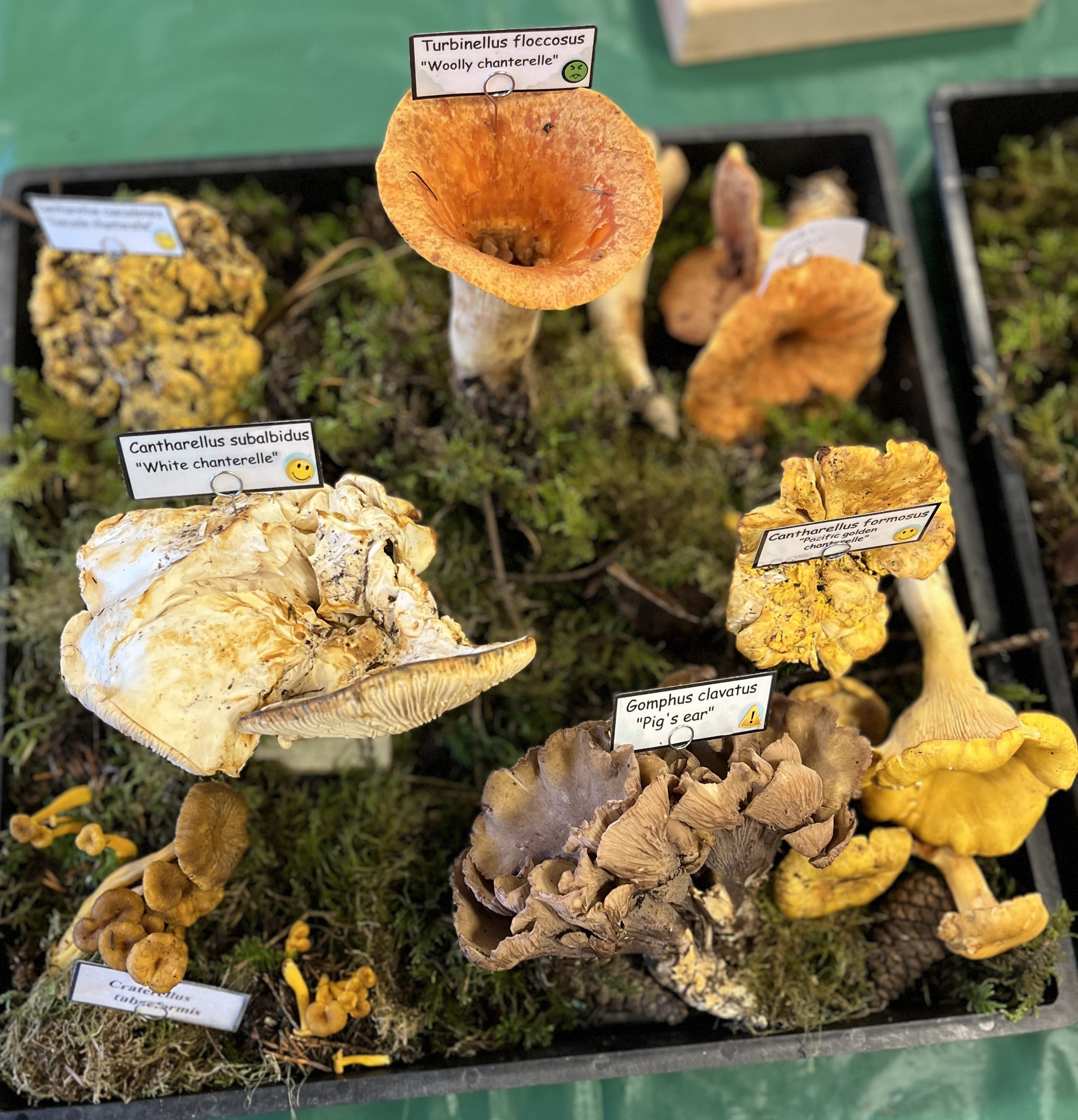
Chantrelles (Cantharelles) and relatives, mostly good and/or great edibles
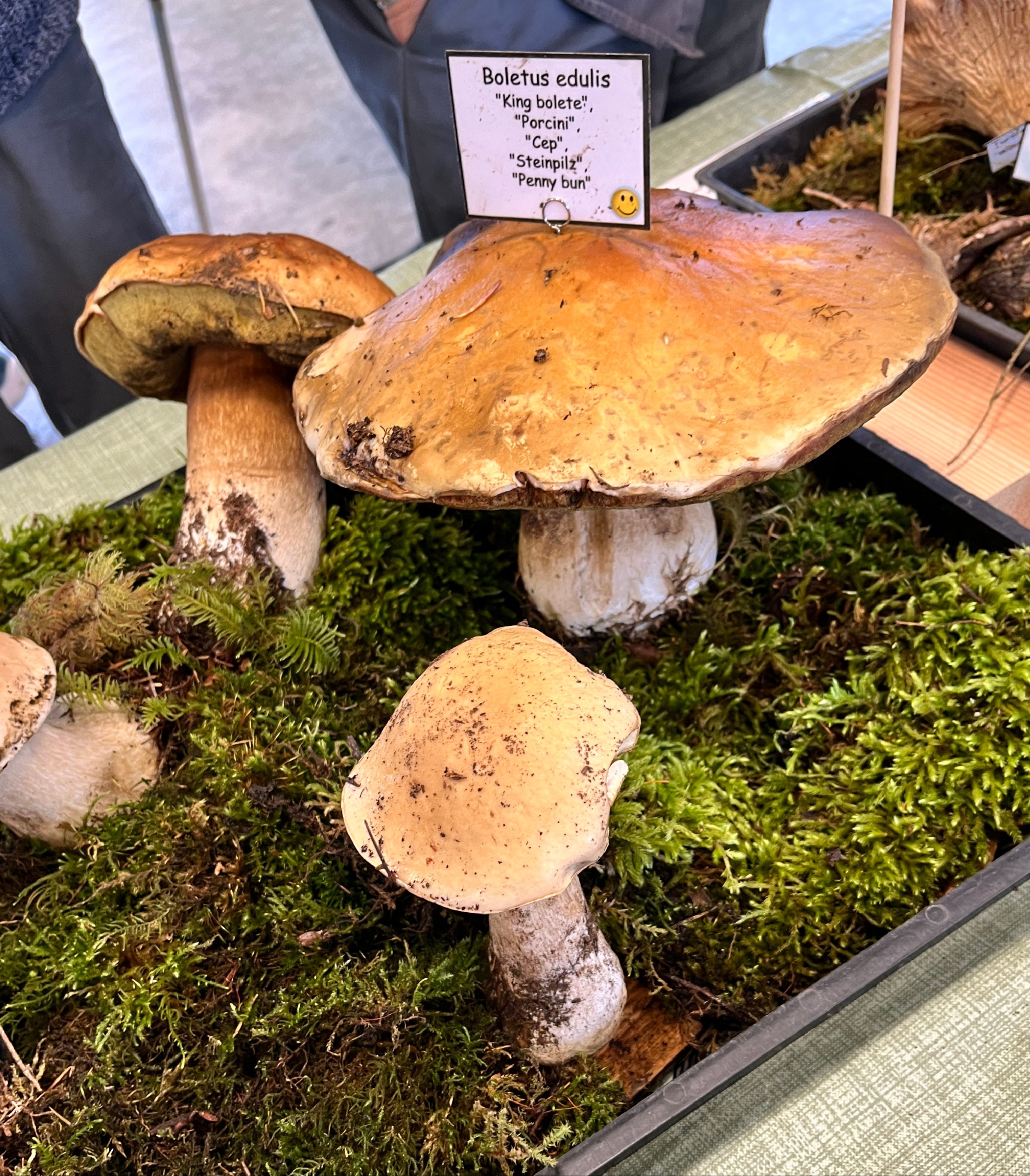
Bolete edulus! For some, this is top of the line, hence the common name: “King Bolete.” Most know these as ”Porcini,” often dried.
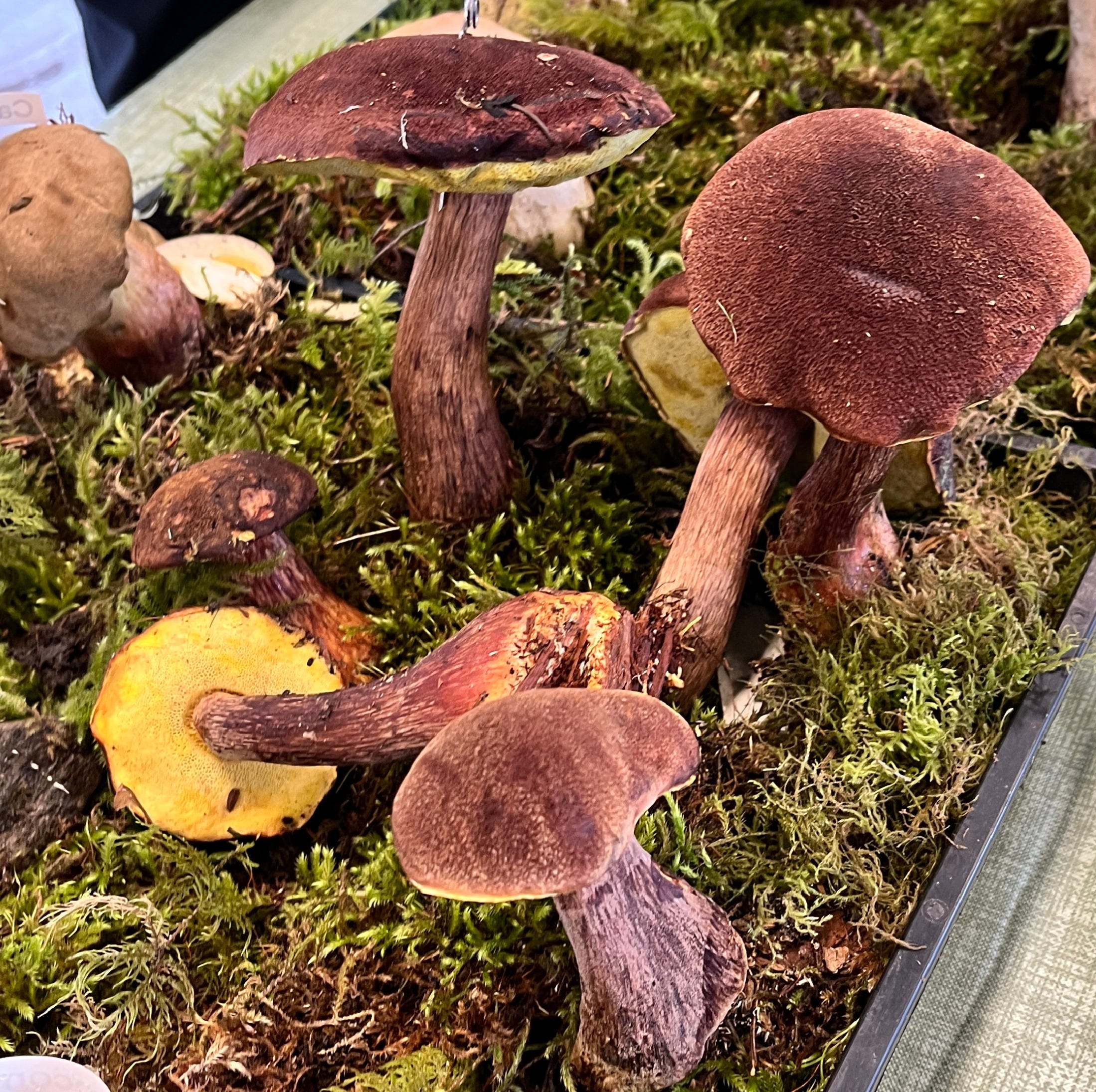
Admirable Bolete (Aureboletus mirabilis) is a handsome species and considered edible but as are many mushrooms, also considered forgetable. .
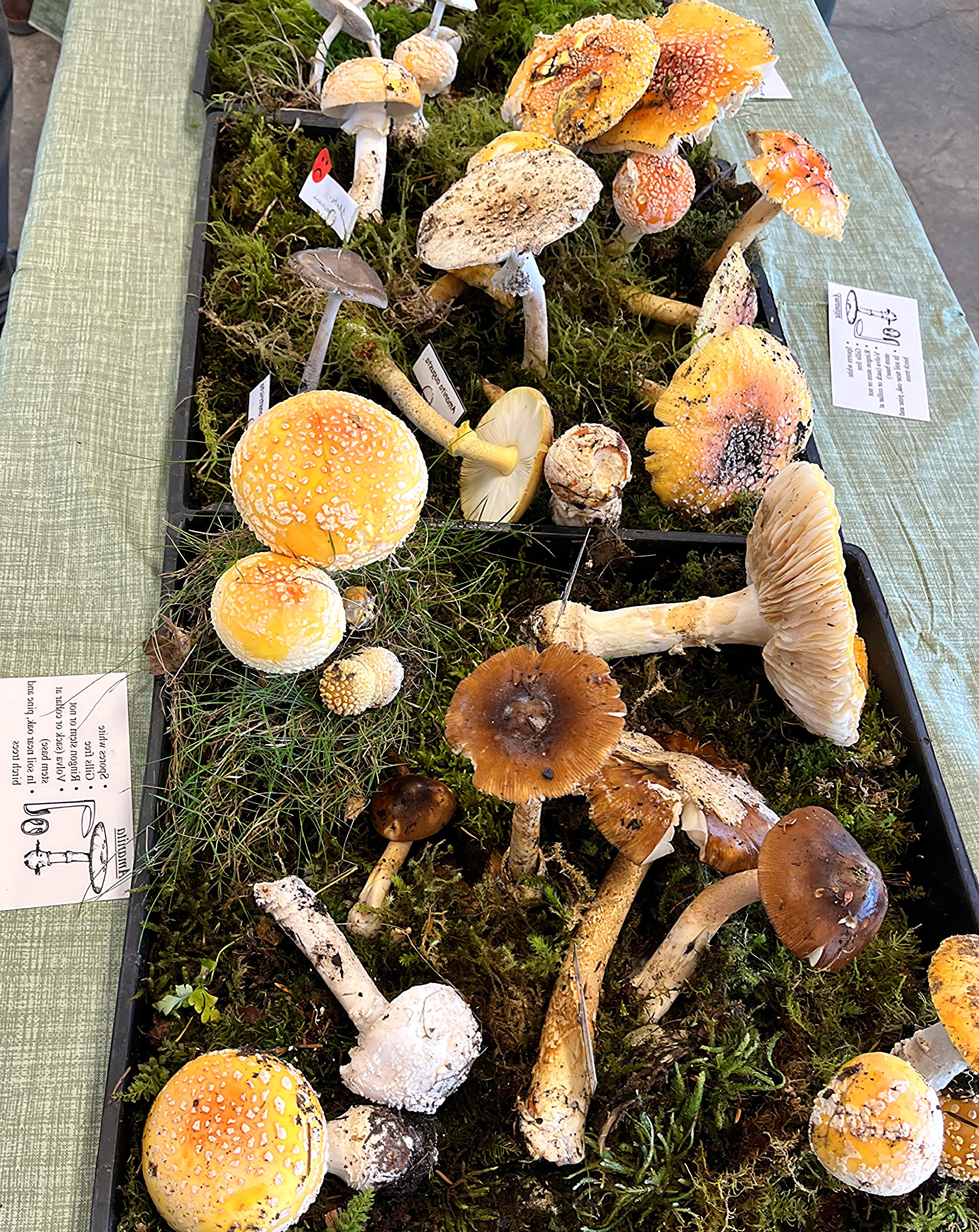
Fly agaric (Amanita muscaria), although striking, especially when in its deep red cap with the white spots, is toxic.
The fly agaric is the prototype of fairy tale mushrooms with interesting properties: on ingestion there are typically hallucinations followed by explosions of the digestive system, sometimes at both ends simultaneously.
I recently brought a couple of these home from the woods for Halloween decorations but as I write this they are fading and won’t make it. Maybe I can get some more by the 31st.


In the wild Potted at Home
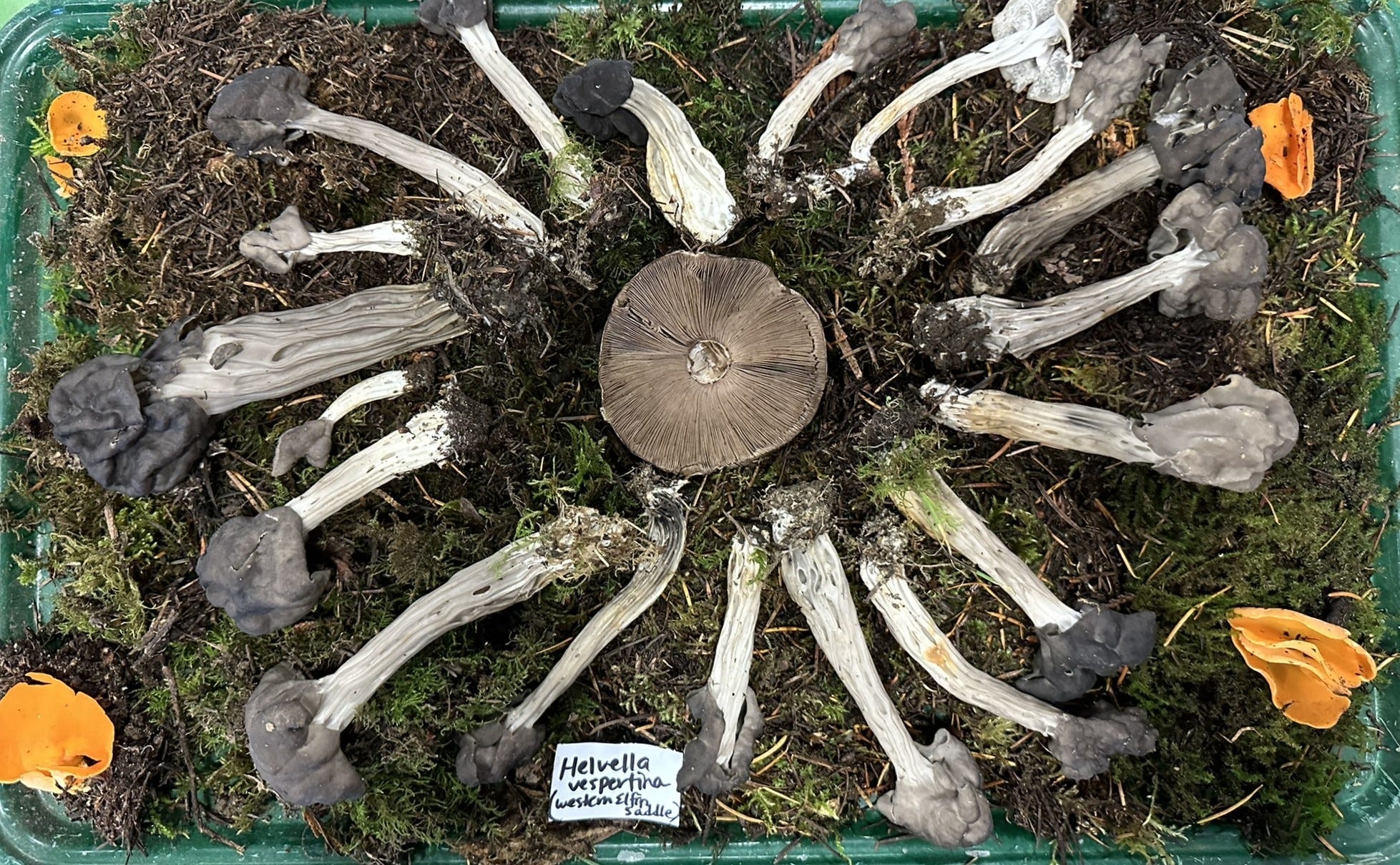
Black Elfin Saddle, (Helvella vespertin), is one of least attractive mushrooms, but there are uglier ones. If well cooked, it is said to be edible or propped up as Halloween decor.
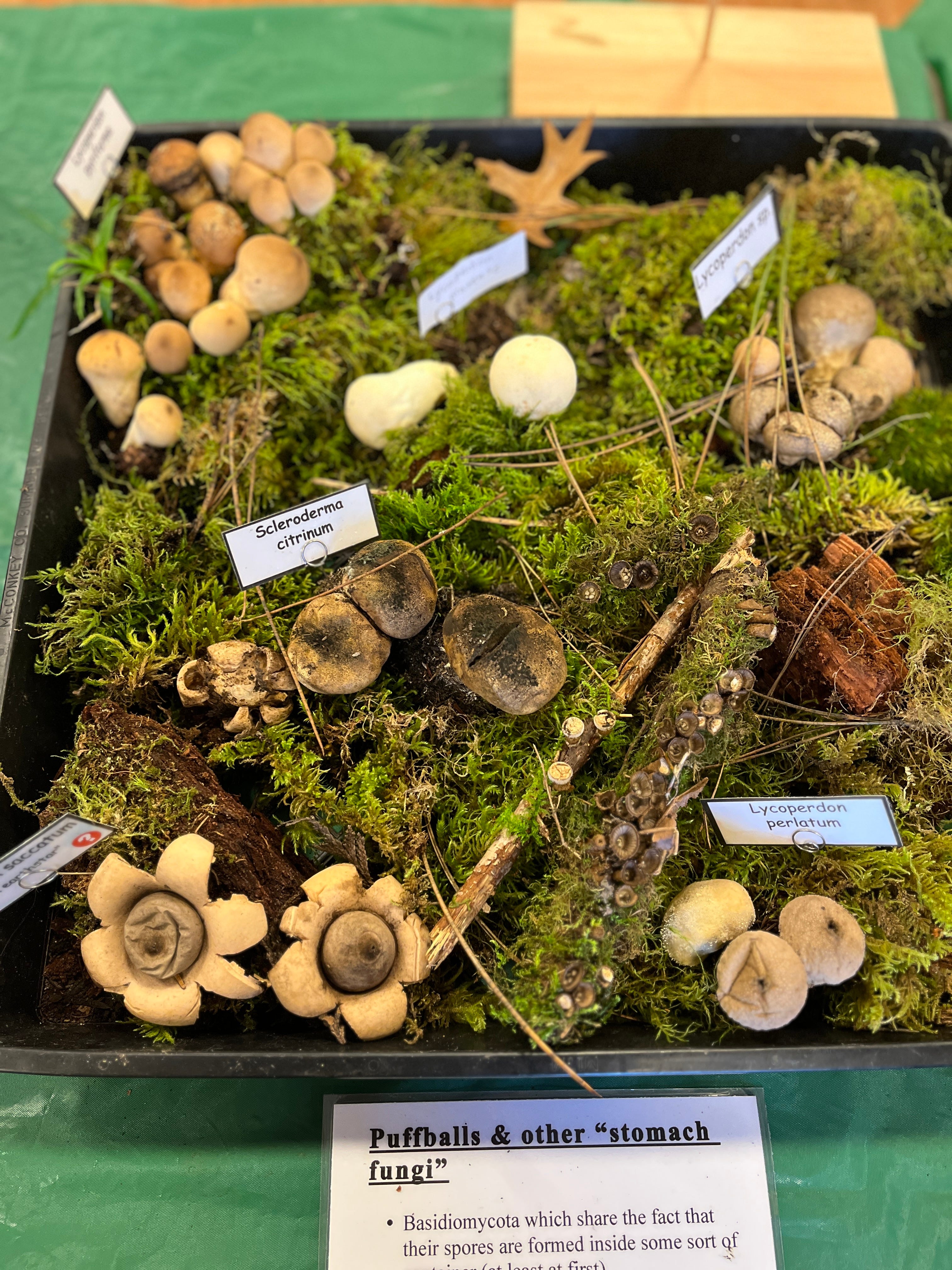
Puffballs are a common group and when mature are active little volcanos that literally puff their reproductive spores into the air when anything touches them. Even a rain drop is sufficient to trigger the puff and help them sow their spores for the next generation.
Below is a video of brown puffballs that mysteriously appeared in my garden under a sage bush. Check out the puffs.
Brown Umber Puffballs (Lycoperdon umbrinum).
And finally, the highlight of the show is always photos with the Mushroom Girls.
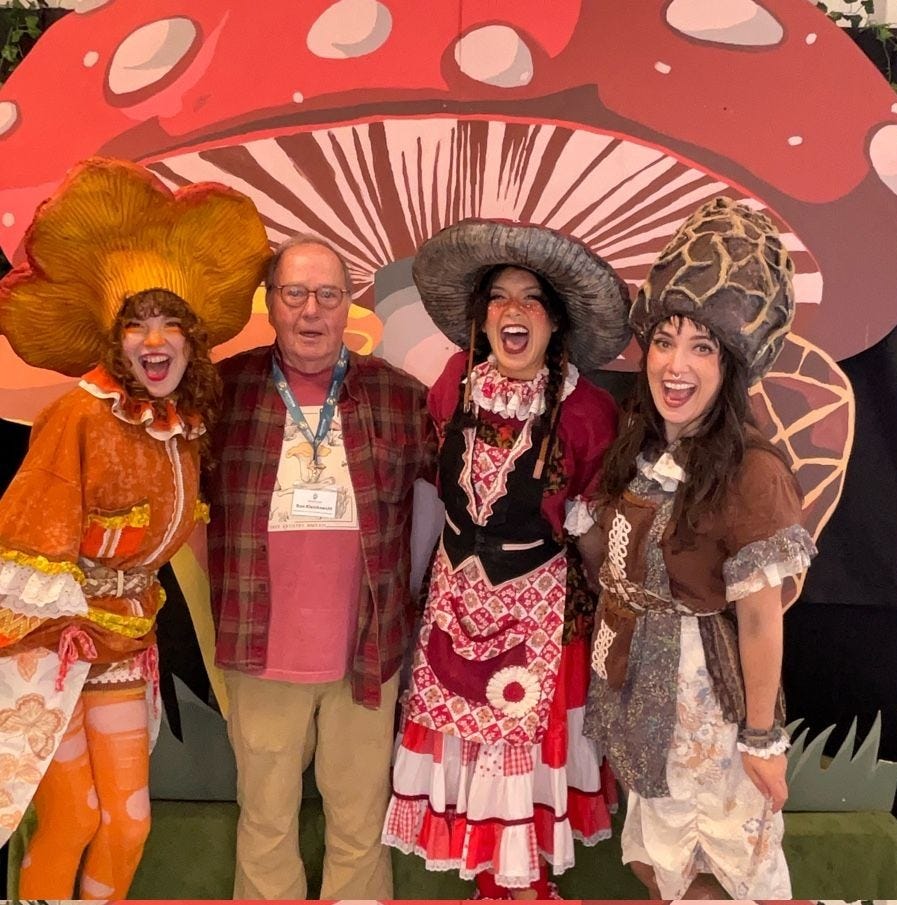
There I am along with Chantrelle, Amanita and Morel.
Thanks for reading and viewing our local festivals. These festivals usher us into a long damp and dark late fall and winter. However, there are a few things to keep us active. There are still some mushrooms out there waiting to be picked, fish yet to be caught and the Farmers Market is open into December.
Also, the Salmon are congregating in the Bay and getting ready to head up stream for their final “Hoorah.” And the eagles can’t wait.
Thanks Christine, I am glas you enjoyed the photos and comments.
Great photos of mushrooms and produce -- I'm quite envious! Really enjoyed the read!